


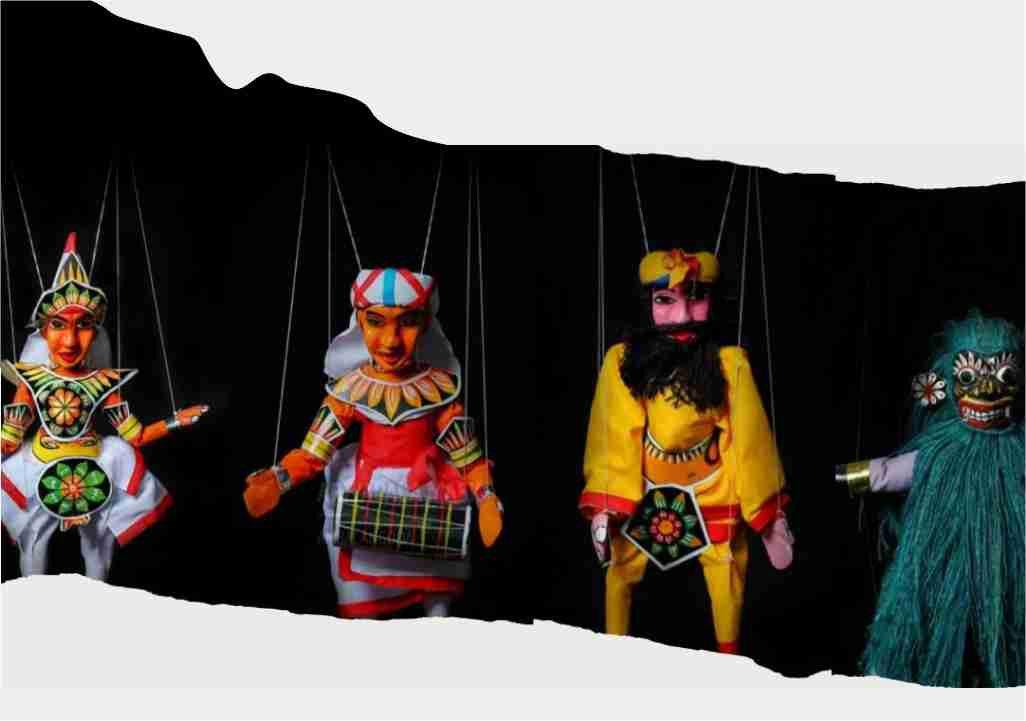
Sri Lankan puppetry is a vibrant and traditional art form that has been enjoyed by generations of people on the island nation. From ancient rituals to modern entertainment, puppets have played a central role in Sri Lankan culture and continue to be a beloved part of the country’s artistic heritage.
One of the most distinctive features of Sri Lankan puppetry is the wide variety of styles and traditions that can be found across the country. In the north, for example, puppets are often used in temple rituals and ceremonies, where they are believed to have the power to bring blessings and good fortune. In the south, puppets are more commonly used in traditional dance performances, where they serve as both a form of entertainment and a way to tell stories and convey messages.
Regardless of their specific use, Sri Lankan puppets are always beautifully crafted and highly expressive. They are made using a variety of materials, including wood, cloth, and paper, and they are often decorated with intricate details and symbols that convey specific meanings.
In addition to their traditional uses, Sri Lankan puppets are also enjoyed by contemporary audiences of all ages. Many puppet troupes tour the country and perform at festivals and events, showcasing their skills and captivating audiences with their performances.
If you are interested in learning more about Sri Lankan puppetry, there are many resources available online and in local libraries. You can also visit museums and galleries that feature traditional Sri Lankan puppets, or attend cultural festivals and events where puppets are used. The art of Sri Lankan puppetry is a rich and fascinating part of the country’s cultural heritage, and it is well worth exploring and learning more about.